Is plasmonic nanotweezing of single proteins possible?
Optical tweezing, using light to manipulate small objects, has revolutionized molecular biophysics as it allowed the study of proteins, the molecular workhorses, at the single-molecule level. I am not exaggerating, look at that nobel prize! Being able to grab a single molecule allows scientists to study these intricate molecular assemblies as little machine, by holding them gently and observing their flappings and jiggles or just ripping them apart.
It’s all great and really cool, but the standard optical tweezer is fundamentally flawed: you need to attach a large (1000nm) bead on your small (10nm) protein in order to be able to tweeze it. Put in simple terms, optical tweezers work by the spatial gradients in the optical field. These can be generated using the focal point of a microscope objective. The optical tweezing forces will be strong enough to manipulate objects if the gradient of the optical field is large over the object. That requires the object to be about the size of focal point, which has a fundamental minimum size of about half the wavelength of the light (500nm) due to its wave properties. The protein is a lot smaller than that, so you need to attach a handle. That is annoying because it requires you first to know the protein well before you can study it and makes the investigation much more elaborate.
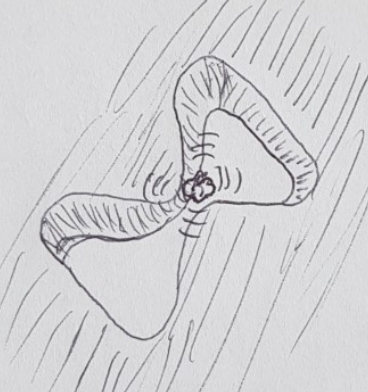
Plasmonic nanotweezers fundamentally try to solve this problem by confining the light wave to the surface of a small metallic nanostructure, enabling the light to be focussed down to the size of a protein. So now single proteins can be tweezed!
Indeed there have been many accounts and research articles that demonstrate this kind of tweezing on a variety of single proteins and small particles. Polystyrene beads, biomarkers, and small protein have been studied using the platform. But despite the first reports of successful tweezing over 15 years ago, widespread adoption of this nanoscale sensor has not ensued. Often scientific research fails to progress into a widely use technology, and that seems to be the case too for plasmonic nanotweezers. But what is holding plasmonic nanotweezers back in studying biomolecules?
The first problem is that part of the strength of the plasmonic nanotweezer - its versatility in that pretty much any object can be tweezed without necessarily detailed knowledge about it - is also its main drawback. It becomes very difficult to obtain detailed knowledge of biomolecules because many different structural and configurational models - to which the signal is somewhat sensitive - are consistent with a certain set of signals from the tweezer. That leaves the localized single-value readout of the nanoscale sensor strongly relying on interpretation.
But the biggest problem with plasmonic nanotweezers is that the way in which they work is not well understood. The trapping works for a wide range of different nanostructures and seems not extremely dependent on their geometry, whereas the field localizations and gradients very much do. Moreover, a super resolution study and failure to obtain reproducible localized Raman signals from tweezed molecules indicate that trapped molecules move around over large areas in the tweezer. That cannot be reconciled with the understanding that the localized field for tweezing only extends over the size of the molecule. Furthermore, signals of trapped molecules show long onset times, incommensurable with the fast dynamics of small proteins. Finally, the reliability on extremely fine control over the nanostructure shape and the tight control required over the material properties of the nanostructure are unlikely achieved with current fabrication methods.
Most likely, plasmonic nanotweezing works well for simple nanodevices and proteins, but thermophoretic and electrostatic forces most likely play a role in the tweezing process. On top of this, non-specifical interactions with the surface of the sensor can significantly aid trapping. And worse of all, sometimes signals interpreted to originate from single molecules are actually generated by larger aggregates. The interactions at the nanoscales need to be better understood and nanofabrication needs to be tighter controlled to proof plasmonic nanotweezers can work with proteins in a manner as versatile as their promise. Until then, they will remain an academic curiosity.
© D.V., 2019. This website is hosted on Github and made using skeleton: getskeleton.com